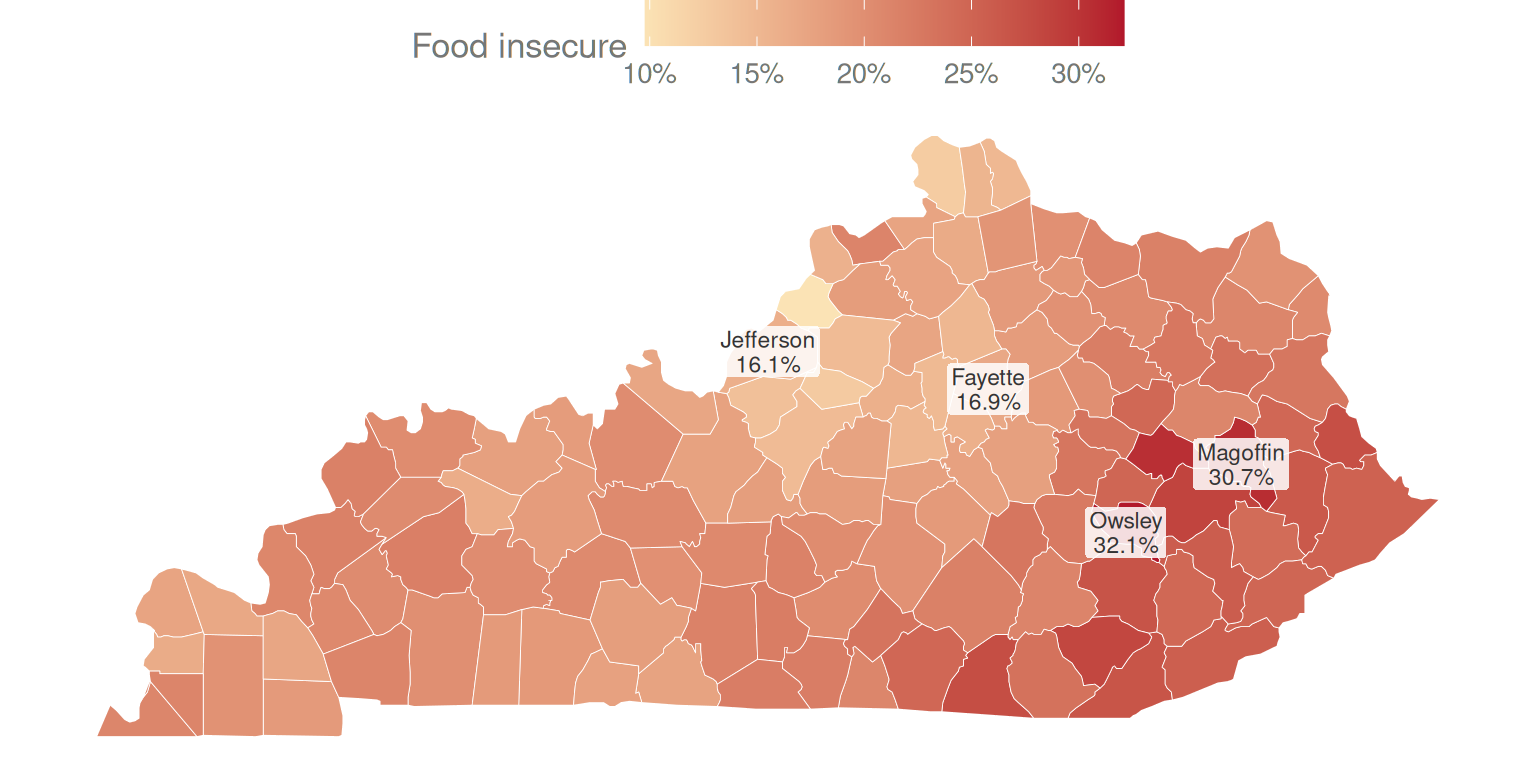
In 2024, about 837,100 Kentuckians, or 18.2% of the state, lived in households that were food insecure: they didn’t have reliable access to enough food. For children the rate was 25.3%, about 257,750 kids. Those figures come from Feeding America’s annual Map the Meal Gap study, which models food insecurity for every county in the country.
The statewide number hides two very different patterns. The highest rates are in the eastern coalfields. The most people are in the cities.
84 of Kentucky’s 120 counties are above the state rate. The worst is Owsley County, where 32.1% of residents are food insecure, followed by Magoffin (30.7%) and Wolfe (30.5%). All ten of the highest-rate counties are in Appalachian Kentucky. In Magoffin County, 40.8% of children are food insecure: about two in five.
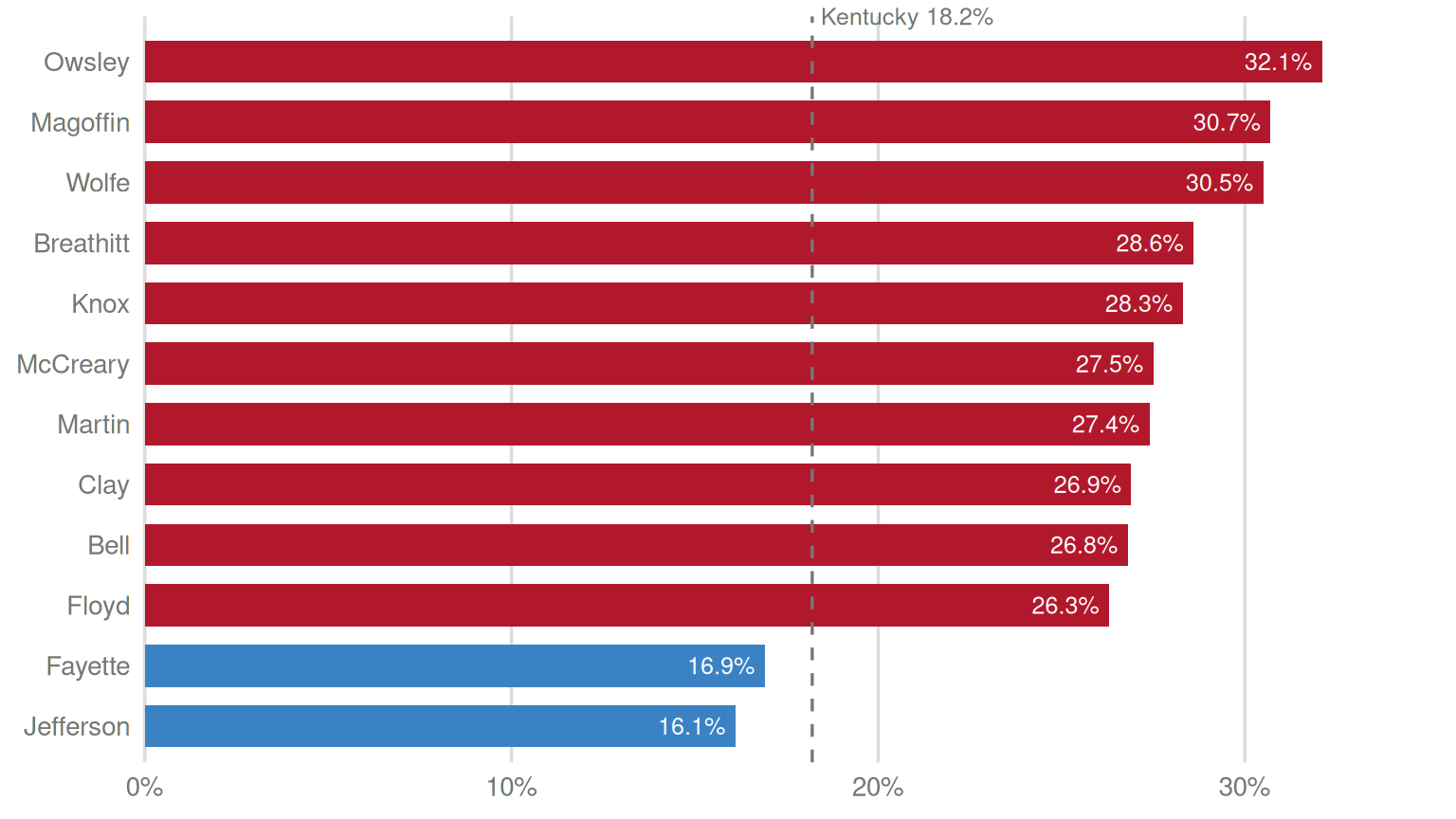
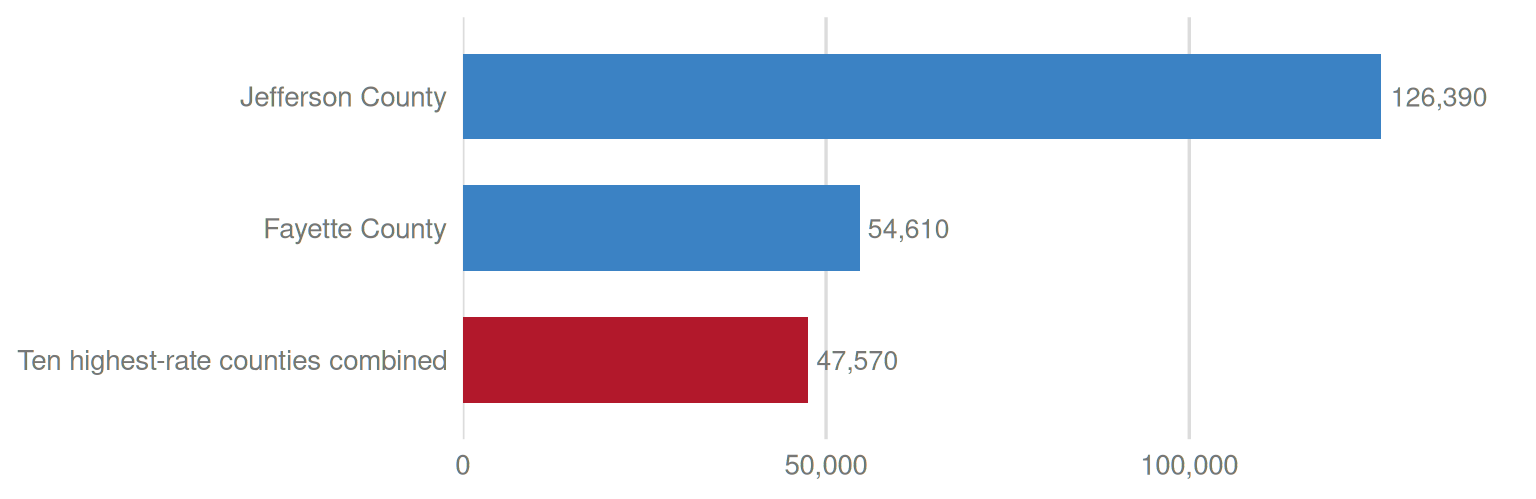
Those are mostly small counties. Add up all ten and you get about 47,570 food-insecure people. Fayette County, where I live, has a rate of 16.9%. That’s below the state average, but it works out to 54,610 people, more than the top ten combined. Jefferson County, at 16.1%, has 126,390.
The two kinds of hunger also differ by who can get help. Map the Meal Gap estimates how many food-insecure people earn too much to qualify for SNAP. In Fayette, it’s 41% of them. In McCreary County it’s 11%, and in Clay County 14%. Food is also more expensive in Lexington: an average meal costs $3.75 there, compared with $3.28 statewide. In the Appalachian counties, the main problem is poverty and most of the people affected are at least eligible for federal help. In the cities, a large share of hungry households fall into the gap between a paycheck and eligibility, and food banks and charity are mostly what’s left.
If you or someone you know needs food, God’s Pantry Food Bank serves central and eastern Kentucky from Lexington, Dare to Care serves the Louisville area, and Feeding America has a food bank locator for everywhere else.
The data comes from Feeding America’s Map the Meal Gap 2024 county estimates, collected November 23, 2026. “Food insecure” counts are modeled estimates, not surveys of each county. The charts were made in R with ggplot2.
Comments
No account needed. Comments appear after I approve them.