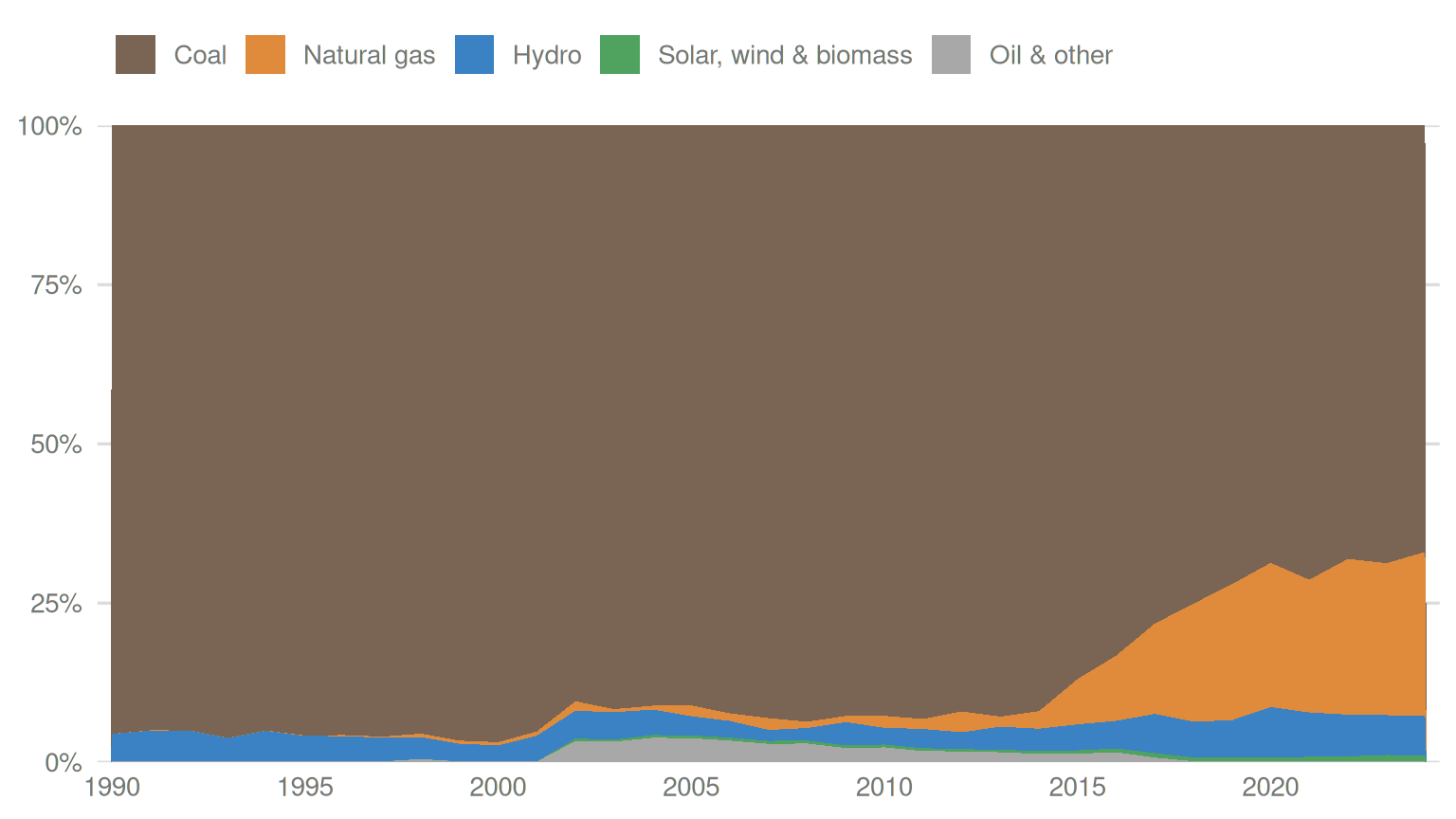
I have often wondered why coal is still given such weight in Kentucky politics despite its shrinking employment footprint. In 2000, coal made 97% of the power generated in the state. By 2024, that was down to 67%. That’s still a huge majority of electricity being generated by coal-fired plants, but it’s a real change, and the thing replacing it is mostly not what you might hope.
The gap has been filled mostly by natural gas, which went from less than 1% of generation in 2000 to 26% in 2024. Gas burns cleaner than coal at the smokestack, but it’s far from ideal, and methane leaks along the supply chain eat into its climate advantage. Solar, wind, and biomass together were just 1% in 2024. Hydroelectricity, mostly from dams on the Cumberland and Tennessee river systems, produces more than that, at 6%.
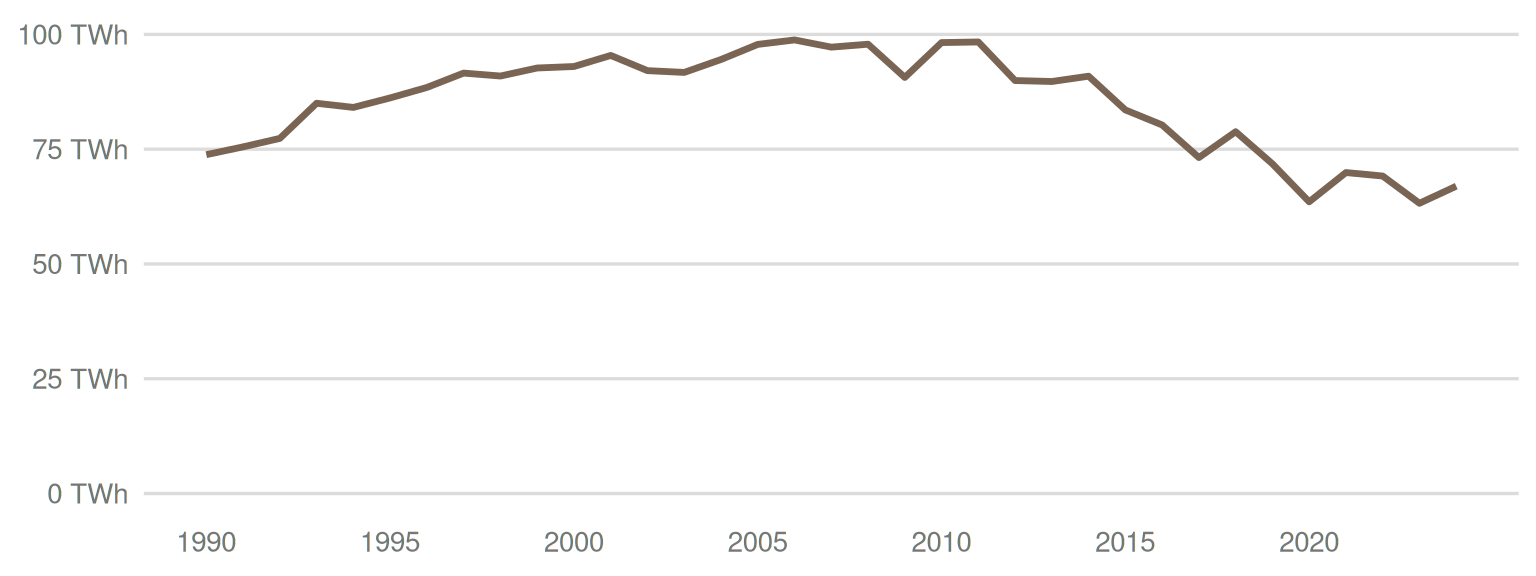
The other half of the story is that Kentucky simply generates less power than it used to. Output peaked in 2006 and was 32% lower by 2024. Coal plants have been retiring faster than new in-state generation has replaced them.
As Costa Samaras argued, getting to net zero is going to take megaprojects. For Kentucky, the open question is whether the next round of plant retirements gets replaced by more gas or by something that actually meaningfully changes the mixture.
The data comes from the EIA’s annual state generation file. The charts were made in R with ggplot2.
Comments
No account needed. Comments appear after I approve them.